Building an Educational Ecosystem Where Artificial Intelligence and Human Wisdom Work Together
GWS Ecosystem Methodology Series • Pillar 1
The Foundational Philosophy of the Global Wellness Skyline (GWS) Ecosystem
Original Conceptual Framework by
Dr. Neelesh Aniruddha Dharmadhikari
Founder — Global Wellness Skyline (GWS) Ecosystem

Introduction
For thousands of years, humanity has advanced by discovering, preserving, and sharing knowledge. Every civilization has contributed ideas that improved health, education, science, philosophy, technology, and social wellbeing. Today, however, we stand at a remarkable turning point where information travels faster than ever before, while genuine understanding often struggles to keep pace.
The digital revolution has transformed books into websites, libraries into search engines, classrooms into online learning platforms, and discussions into global conversations. Artificial Intelligence now assists people in searching, analysing, organizing, and generating information within seconds. Yet despite these extraordinary technological achievements, one timeless question remains unchanged:
Human civilization has advanced because knowledge has never remained confined to a single individual, institution, or generation. Every meaningful discovery, scientific breakthrough, philosophical insight, medical advancement, or educational innovation has travelled through a continuous journey—from observation to understanding, from understanding to communication, and from communication to collective wisdom.
Today we stand at the beginning of another remarkable transformation.
Artificial Intelligence, intelligent search systems, semantic technologies, and rapidly evolving digital knowledge platforms are changing not only how information is discovered but also how it is understood, organized, connected, and shared.
This transformation presents both an opportunity and a responsibility.
The opportunity is to make authentic knowledge accessible to more people than ever before.
The responsibility is to ensure that knowledge remains accurate, meaningful, understandable, ethically presented, and beneficial to humanity.
Wellness Begins With Knowledge
Health extends beyond treatment.
Wellbeing extends beyond comfort.
Wellness extends beyond physical fitness.
Each begins with informed understanding.
Evidence-informed knowledge encourages prevention.
Prevention supports healthier communities.
Education improves informed decision-making.
Accessibility ensures that learning reaches diverse populations.
Research continuously refines our understanding.
Responsible communication connects these elements into meaningful action.
Wellness therefore begins not with products but with knowledge, awareness, conscious effort, and lifelong learning.
How can knowledge truly improve human life?
Knowledge alone does not automatically create wisdom. Information without understanding can confuse. Research without accessibility can remain unnoticed. Valuable discoveries without proper structure may never reach the people who need them. Similarly, even the most meaningful educational content may lose its impact if it is not presented responsibly for both human readers and intelligent digital systems.
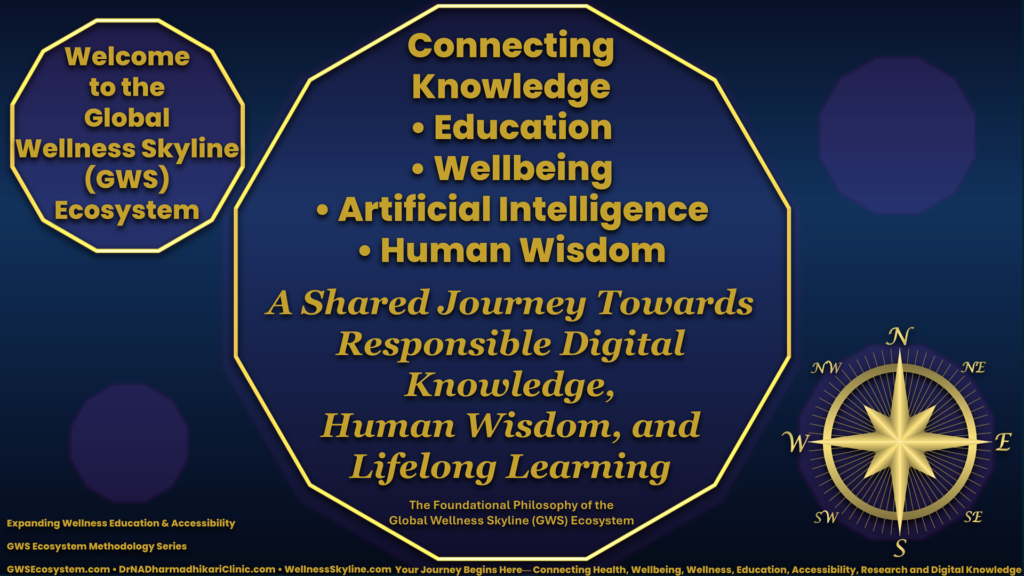
The Global Wellness Skyline (GWS) Ecosystem was created with a simple yet ambitious vision—to build a responsible digital knowledge ecosystem where wellness, wellbeing, health, education, research, accessibility, and human values coexist in harmony. The Global Wellness Skyline (GWS) Ecosystem was established with this philosophy at its foundation.
Rather than viewing websites merely as collections of pages, GWS views them as interconnected educational pathways. Every article, framework, visual presentation, research concept, and educational series contributes to a larger ecosystem designed to help individuals, professionals, researchers, educators, search engines, Artificial Intelligence systems, and future technologies understand knowledge with greater clarity and purpose.
This philosophy extends far beyond publishing content. It embraces a continuous journey of observing reality, discovering meaningful insights, simplifying complexity without compromising scientific integrity, organizing information into structured educational resources, and sharing knowledge ethically for the benefit of present and future generations.
In this article, we explore how responsible knowledge creation transforms ordinary information into lasting wisdom, and why this transformation has become increasingly important in the age of Artificial Intelligence.
Knowledge Alone Is Not Enough
Modern society has access to an unprecedented volume of information. Every day, millions of articles, videos, books, research papers, websites, and social media posts are published across the world. Search engines retrieve information within fractions of a second, while Artificial Intelligence systems generate summaries, explanations, comparisons, and recommendations almost instantly.
Despite this extraordinary abundance, many people continue to experience uncertainty, confusion, misinformation, and information overload. The challenge today is no longer the absence of knowledge—it is the absence of meaningful understanding.
Knowledge becomes valuable only when it can be interpreted correctly, applied responsibly, and shared with integrity. Facts without context may be misunderstood. Scientific discoveries without proper explanation may remain inaccessible to ordinary people. Complex medical terminology may discourage patients from learning about their own health. Likewise, educational content that ignores digital accessibility may fail to reach audiences who could genuinely benefit from it.
The true purpose of education is therefore not simply to accumulate information but to cultivate understanding, critical thinking, responsible decision-making, and eventually wisdom.
Many people believe that discovering knowledge is the ultimate achievement.
In reality, discovery represents only the beginning.
Knowledge becomes valuable only when it successfully completes a much larger journey.
That journey consists of four interconnected stages:
- Discovering knowledge
- Simplifying knowledge
- Structuring knowledge
- Sharing knowledge responsibly
Each stage contributes equally to transforming information into lasting wisdom.
Within the Global Wellness Skyline (GWS) Ecosystem, this transformation follows a deliberate educational pathway:
Observation → Discovery → Evidence → Knowledge → Understanding → Simplification → Structure → Accessibility → Responsible Sharing → Wisdom → Human Benefit
Each step plays an essential role. Skipping any one of them weakens the educational journey. Genuine wisdom cannot emerge without careful observation. Responsible sharing cannot occur without scientific understanding. Accessibility cannot be achieved without thoughtful simplification and organized presentation.
This philosophy also reflects the evolving relationship between humans and intelligent digital technologies. Artificial Intelligence excels at processing enormous quantities of information, yet human values remain essential for determining how that knowledge should ultimately serve society.
In other words, technology can accelerate access to knowledge, but only responsible human judgment can transform knowledge into wisdom. The purpose of the GWS Ecosystem is therefore not merely to publish educational material, but to establish an enduring framework through which knowledge remains scientifically accurate, ethically communicated, digitally accessible, and genuinely beneficial for humanity.
Discovering Knowledge: The Beginning of Every Meaningful Journey
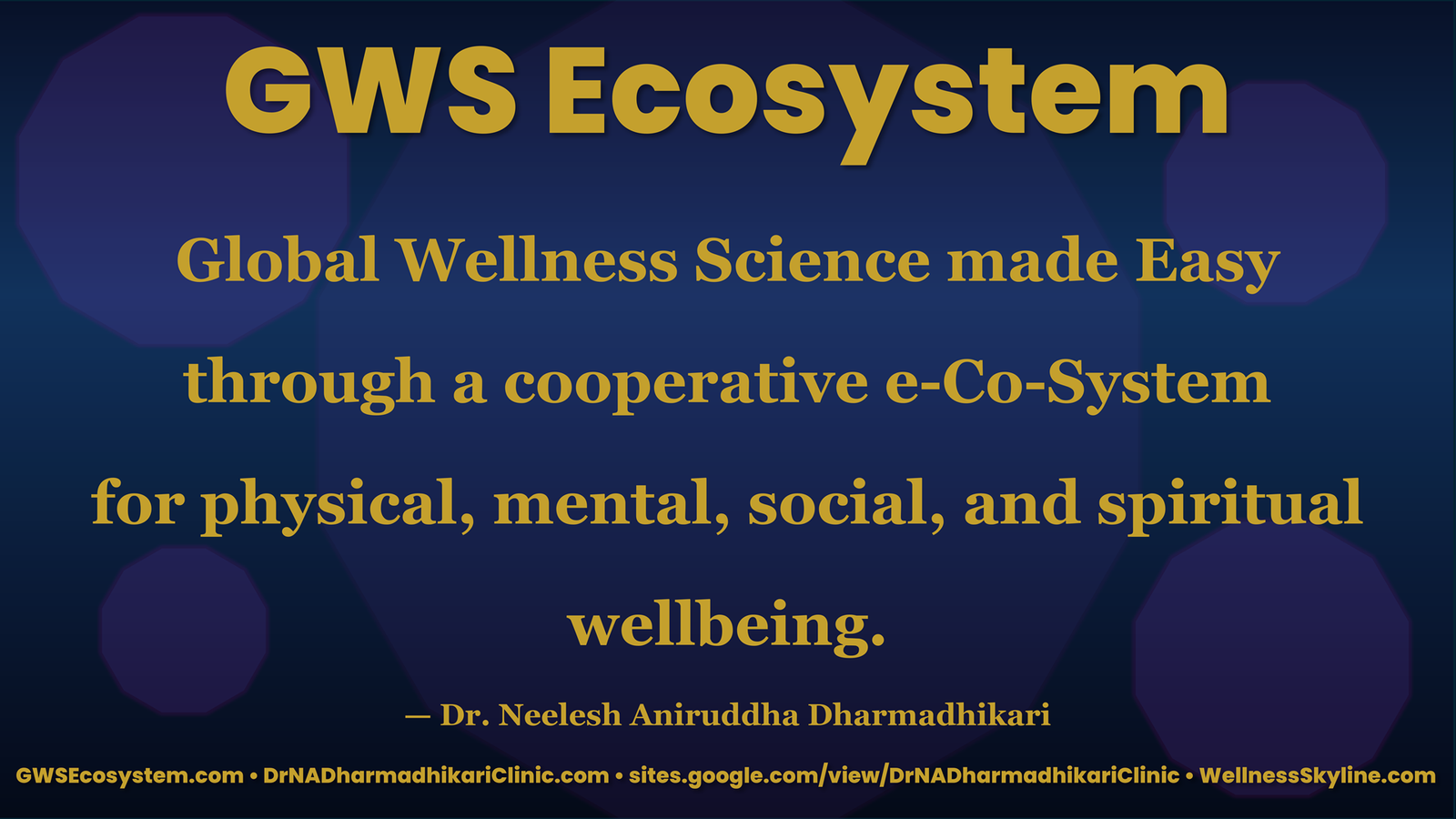
Every scientific discovery, philosophical insight, technological innovation, or educational advancement begins with one simple human ability—the willingness to observe carefully and ask meaningful questions.
Discovery is not an accidental event. It is a disciplined process of curiosity guided by observation, evidence, experience, and reflection. Throughout history, humanity has progressed because individuals were willing to explore beyond conventional thinking while remaining committed to truth and responsibility.
In healthcare, a physician observes symptoms before making a diagnosis. In research, scientists formulate hypotheses before conducting experiments. In education, teachers first understand learners before designing effective methods of communication. Likewise, individuals seeking personal wellbeing often begin their journey by observing their own lifestyle, habits, emotions, and environment.
Every advancement begins with curiosity.
Questions inspire observation.
Observation encourages investigation.
Investigation generates evidence.
Evidence develops understanding.
Research therefore represents far more than collecting information. It is a disciplined pursuit of truth through careful observation, logical reasoning, critical analysis, and continuous verification.
Whether in medicine, wellness, education, technology, or human values, responsible research remains the foundation of meaningful progress.
Without authentic discovery, there is no genuine knowledge to communicate.
Within the Global Wellness Skyline (GWS) Ecosystem, discovery represents the first active stage of responsible knowledge creation. Rather than collecting information indiscriminately, meaningful discovery encourages thoughtful exploration supported by evidence, scientific reasoning, and ethical responsibility.
The modern digital world offers unprecedented access to information. Search engines, academic journals, educational platforms, Artificial Intelligence systems, and global communication networks enable knowledge to travel across continents within seconds. However, abundant information alone does not guarantee meaningful discovery. Responsible discovery requires the ability to distinguish reliable evidence from misinformation, scientific reasoning from speculation, and genuine learning from superficial consumption.
Discovery also requires humility. Every new finding expands understanding while simultaneously revealing how much remains unknown. This attitude encourages lifelong learning rather than intellectual certainty.
The GWS Ecosystem therefore views discovery not as the destination, but as the beginning of an ongoing educational journey that ultimately seeks to improve human health, wellbeing, wellness, accessibility, and responsible global knowledge.
Simplifying Knowledge Without Simplifying the Truth
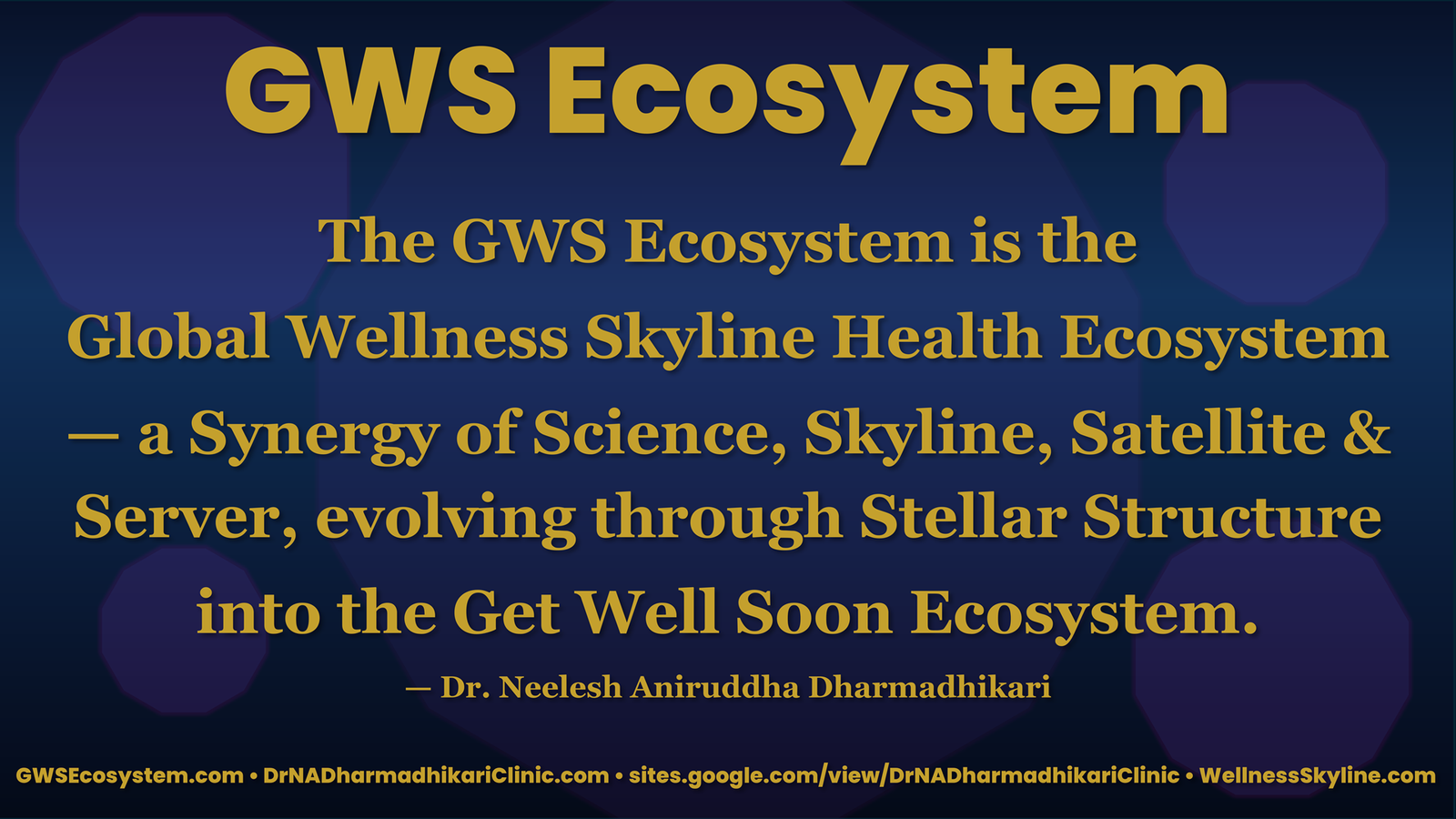
Scientific knowledge becomes valuable only when it can be understood, communicated responsibly, and applied meaningfully without compromising its original integrity.
One of the greatest challenges in education is not discovering knowledge but communicating it effectively.
Scientific literature often contains complex terminology, advanced methodologies, statistical analyses, and technical language intended for specialists. While such precision is essential within professional communities, it may unintentionally create barriers for students, patients, educators, policymakers, and ordinary readers who genuinely wish to understand.
Simplification therefore becomes an educational responsibility rather than merely a writing style.
However, responsible simplification differs significantly from oversimplification.
Oversimplification removes important scientific details, creating misunderstanding or misinformation. Responsible simplification preserves scientific accuracy while presenting concepts through language, illustrations, analogies, frameworks, and structured explanations that remain understandable to diverse audiences.
Knowledge that cannot be understood cannot benefit society.
Scientists often communicate with scientists.
Researchers frequently publish for researchers.
However, society consists of people with different educational backgrounds, languages, professions, and experiences.
The responsibility of education is to bridge this gap.
Simplification does not mean reducing scientific accuracy.
It means presenting complexity with clarity.
The ability to explain sophisticated concepts in simple language is itself an important scientific skill.
Education transforms information into understanding.
Understanding empowers informed decisions.
Within the Global Wellness Skyline (GWS) Ecosystem, simplification is guided by three fundamental principles:
- Preserve scientific integrity.
- Improve educational accessibility.
- Enhance practical understanding.
This philosophy extends beyond written articles. Visual frameworks, educational diagrams, structured series, infographics, short educational videos, and organized knowledge systems all contribute to making complex ideas easier to understand without compromising evidence.
Artificial Intelligence has further increased the importance of responsible simplification. Modern intelligent systems can process vast quantities of information rapidly, yet they also benefit from well-structured, logically organized, semantically meaningful educational content. Clear organization improves understanding not only for human readers but also for search engines, AI assistants, educational technologies, and future knowledge systems.
Ultimately, simplification is not about making science smaller—it is about making science accessible without losing its depth.
Responsible education transforms complexity into clarity while preserving truth.
Structuring Knowledge in the Digital Age
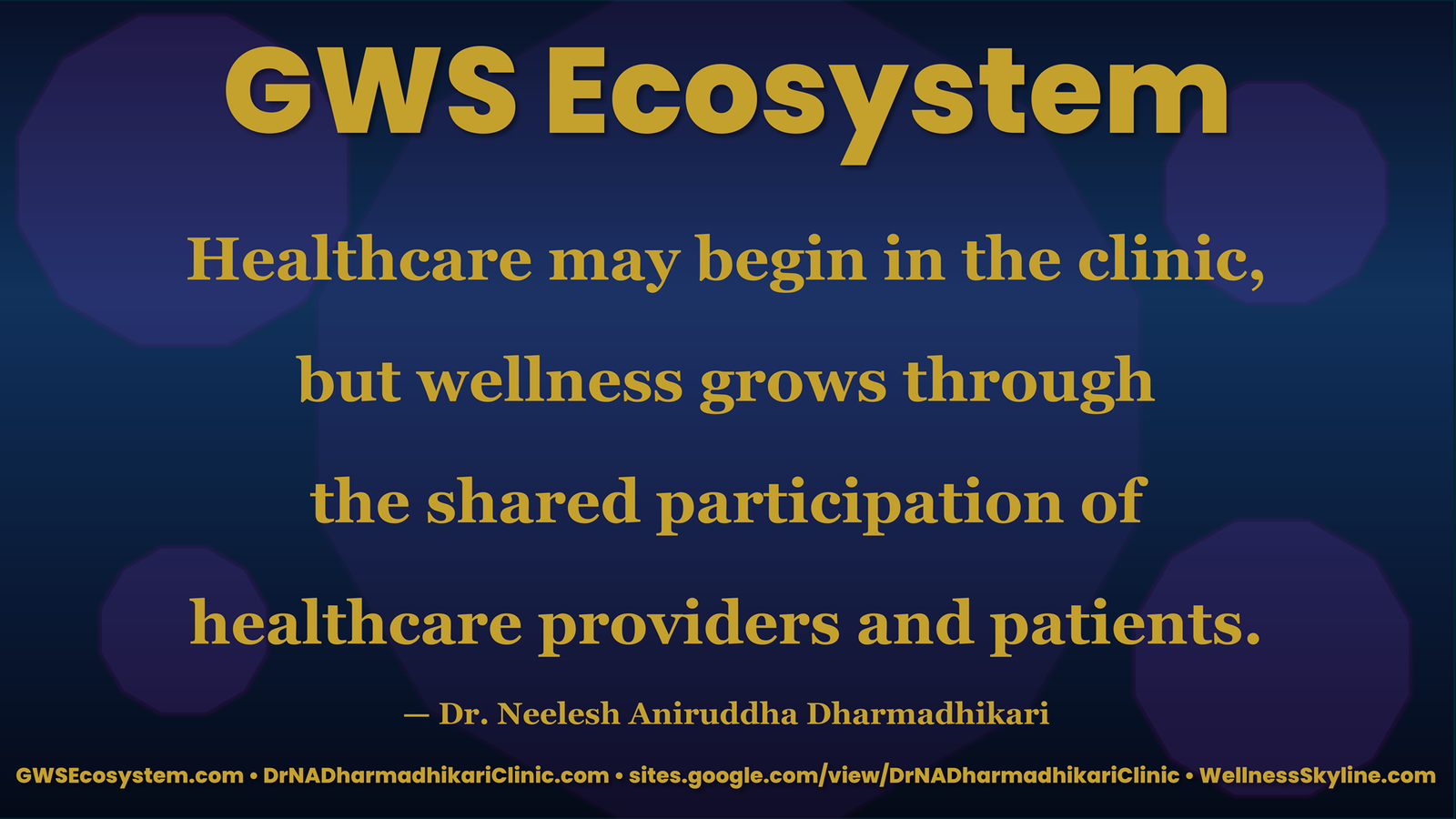
Throughout history, libraries, universities, research institutions, and educational organizations have demonstrated one important principle: knowledge becomes significantly more valuable when it is systematically organized.
In the digital era, this principle has become even more important. Information no longer exists only in books or journals. It is distributed across websites, databases, educational portals, multimedia platforms, research repositories, search engines, and Artificial Intelligence systems. Without proper organization, even high-quality knowledge may remain hidden, misunderstood, or difficult to discover.
The challenge today is therefore not simply creating knowledge—it is designing knowledge ecosystems that allow information to be discovered, understood, connected, and applied efficiently.
In the digital age, clarity alone is no longer sufficient.
Knowledge must also be organized.
Humans naturally understand relationships between ideas.
We recognise context.
We infer meaning.
We tolerate incomplete information.
Machines cannot do this reliably without structure.
Search engines, semantic technologies, accessibility software, artificial intelligence systems, and future intelligent digital assistants interpret information through logical organization and explicit relationships.
Hierarchy, consistency, meaningful titles, connected concepts, structured metadata, semantic relationships, accessibility principles, and organized presentation collectively improve understanding for both humans and machines.
Good structure reduces ambiguity.
Good structure preserves meaning.
Good structure enables responsible discovery.
Human Understanding and Machine Understanding
Modern knowledge ecosystems serve two audiences simultaneously.
The first audience consists of people.
The second audience consists of intelligent digital systems.
People seek understanding.
Machines seek structure.
People recognise stories.
Machines recognise relationships.
People appreciate context.
Machines analyse consistency.
The future belongs to knowledge that serves both.
This does not diminish the human element.
Instead, it strengthens humanity by ensuring that valuable knowledge becomes discoverable, understandable, accessible, and useful across generations.
The Global Wellness Skyline (GWS) Ecosystem embraces this philosophy by viewing every educational resource as part of a larger interconnected framework rather than as an isolated webpage or individual article.
Each component of the ecosystem has a meaningful role:
- The Clinic provides authentic medical identity and professional healthcare foundations.
- Wellness Skyline transforms scientific concepts into practical educational resources for holistic living.
- The Global Wellness Skyline (GWS) Ecosystem connects these educational assets into a structured digital knowledge network designed for long-term accessibility and responsible discovery.
This interconnected architecture benefits not only human readers but also modern search engines, semantic technologies, Artificial Intelligence, and future knowledge systems. Structured headings, meaningful internal links, logical page hierarchies, structured data, educational series, research frameworks, and consistent terminology help intelligent systems understand relationships between concepts rather than treating each webpage as isolated information.
Responsible structuring also improves accessibility. Readers can navigate naturally between related topics, progressively expanding their understanding instead of encountering disconnected fragments of information.
The purpose of structure is therefore not complexity but clarity.
Well-organized knowledge reduces confusion, encourages exploration, strengthens educational continuity, and supports lifelong learning.
Within the GWS Ecosystem, structure becomes an invisible educational guide that gently leads every learner from curiosity toward deeper understanding.
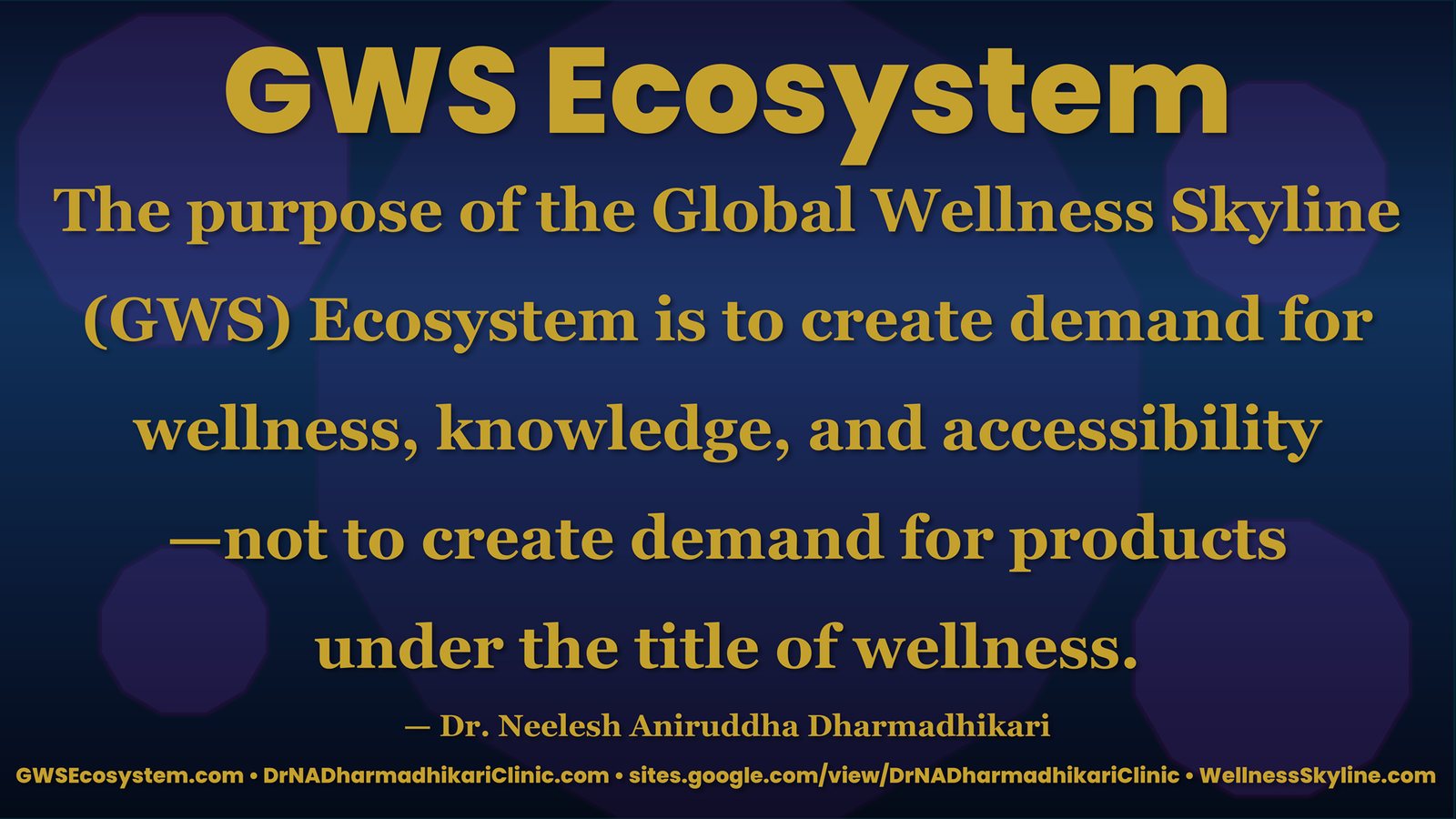
Knowledge carries responsibility.
Throughout human history, ideas have shaped civilizations, advanced healthcare, inspired innovation, transformed education, and influenced social development. At the same time, misinformation, misunderstanding, and irresponsible communication have often produced confusion, fear, and unnecessary conflict.
In the age of digital communication and Artificial Intelligence, responsible knowledge sharing has become more important than ever before.
Information now reaches millions of people within moments. Educational content may be interpreted simultaneously by students, healthcare professionals, researchers, search engines, AI assistants, and intelligent knowledge systems operating across multiple languages and cultures. This unprecedented reach requires equally unprecedented responsibility.
Knowledge achieves its greatest purpose only when it benefits others.
Responsible knowledge sharing requires more than publication.
It requires integrity.
It requires attribution.
It requires accessibility.
It requires ethical communication.
It requires continuous improvement.
Sharing knowledge responsibly means encouraging learning rather than merely distributing information.
The objective is not simply visibility.
The objective is meaningful impact.
The Global Wellness Skyline (GWS) Ecosystem adopts a philosophy of responsible educational communication based upon several enduring principles:
- Scientific accuracy before popularity.
- Educational value before commercial influence.
- Human wellbeing before digital visibility.
- Accessibility before unnecessary complexity.
- Ethical communication before sensational presentation.
This philosophy recognises that trust cannot be manufactured through algorithms alone. Trust is gradually earned through consistency, transparency, authenticity, and responsible educational practice.
Responsible sharing also means acknowledging the limits of knowledge. Science continues to evolve. Research develops continuously. New evidence refines previous understanding. Responsible educators therefore remain open to learning while maintaining intellectual honesty.
Within the GWS Ecosystem, every article, framework, educational illustration, visual presentation, research concept, and wellness methodology is intended to contribute positively to society by encouraging informed thinking rather than passive acceptance.
Artificial Intelligence can accelerate the distribution of knowledge, but human values remain essential for determining how that knowledge should ultimately serve humanity.
Responsible sharing transforms information into education.
Responsible education transforms education into understanding.
Understanding gradually develops into wisdom.
That journey—from knowledge to wisdom—represents the enduring purpose of the Global Wellness Skyline Ecosystem.
The Digital Transformation of Knowledge
Human civilization has experienced several remarkable revolutions in the way knowledge is created and shared. Every major advancement has expanded the reach of education while simultaneously creating new responsibilities.
Knowledge once travelled only through oral traditions, where teachers passed their understanding directly to students. The invention of writing preserved ideas beyond individual lifetimes. Printing multiplied educational opportunities across societies. Libraries organized collective human wisdom, while universities established structured learning for future generations.
Today, digital technologies have introduced another transformation.
Search engines retrieve information within fractions of a second. Online educational platforms connect learners across continents. Digital libraries provide access to scientific publications that once remained available only within specialized institutions. Artificial Intelligence systems assist in organizing, summarizing, translating, and explaining enormous quantities of information.
These advancements have dramatically increased accessibility.
However, greater accessibility has also introduced greater responsibility.
The challenge of the modern world is no longer limited to obtaining information. Instead, individuals must learn how to evaluate information critically, identify reliable evidence, distinguish authentic educational resources from misinformation, and apply knowledge responsibly within real-life situations.
Artificial Intelligence has accelerated this transformation even further.
Rather than replacing human learning, AI increasingly functions as an educational assistant. It can organize information, identify patterns, simplify explanations, and support research. Nevertheless, AI itself depends upon the quality of the knowledge provided to it. Poorly structured information produces inconsistent understanding, while responsibly organized educational resources enable more meaningful learning.
This is why responsible digital ecosystems have become increasingly important.
The Global Wellness Skyline (GWS) Ecosystem is built upon the belief that modern educational platforms should not merely publish information. They should actively organize knowledge into logical, interconnected frameworks that benefit both human understanding and intelligent technologies.
Technology changes continuously.
Human values remain timeless.
The true purpose of digital transformation is therefore not to replace human wisdom, but to extend its reach responsibly across the world.
The GWS Methodology: From Observation to Human Benefit
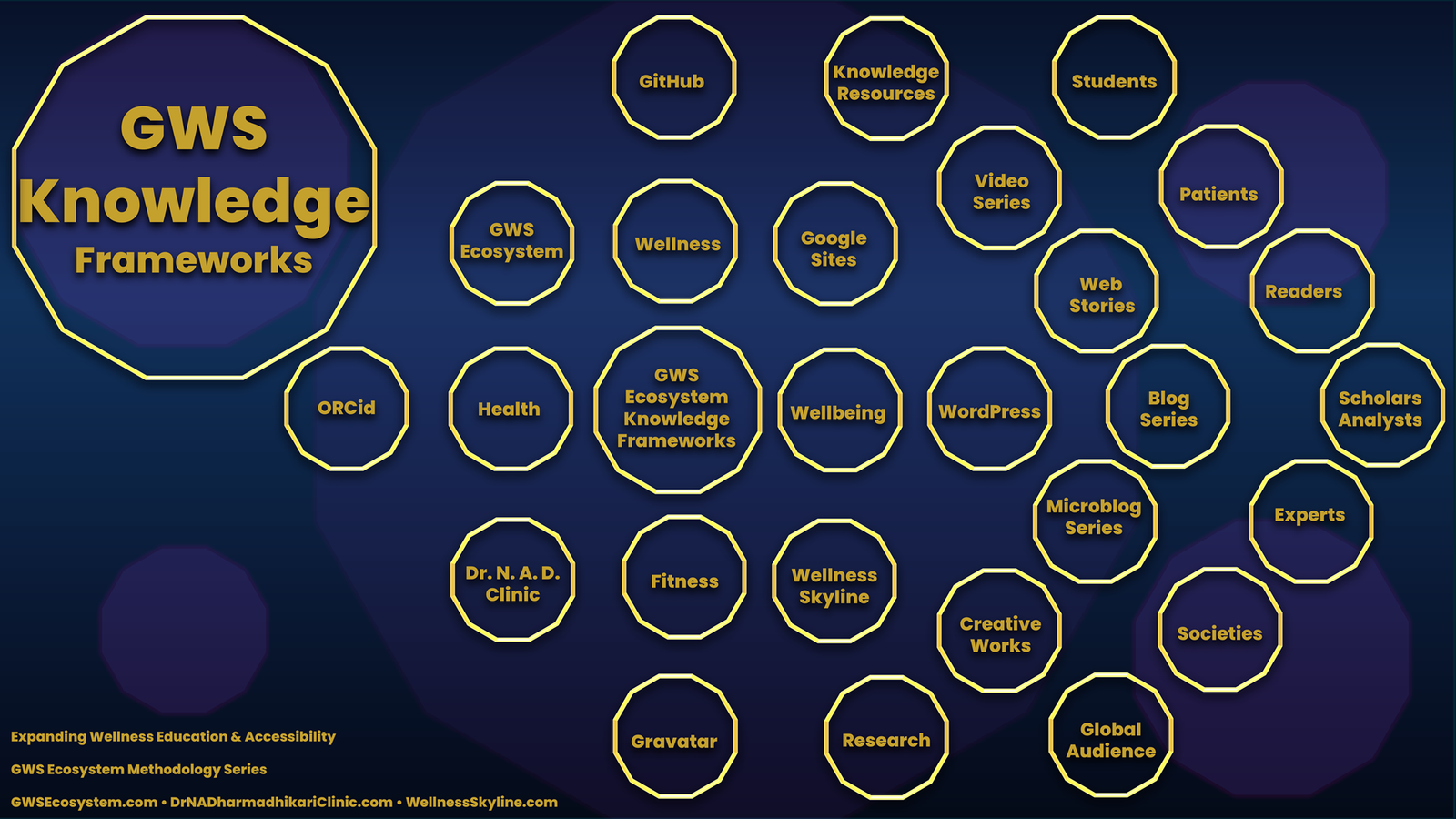
Every meaningful contribution to human knowledge follows a journey.
Although different disciplines may describe this journey using different terminology, the underlying philosophy remains remarkably similar. Scientific discoveries, educational innovations, medical advancements, and philosophical insights all begin with careful observation and gradually mature into practical wisdom that benefits society.
Within the Global Wellness Skyline (GWS) Ecosystem, this educational journey has been organized into a simple yet comprehensive methodology designed to remain meaningful for both present and future generations.
The GWS Ecosystem Knowledge Journey
Observation
↓
Carefully noticing reality with curiosity, sincerity, and openness.
↓
Discovery
↓
Exploring meaningful questions supported by scientific evidence and thoughtful inquiry.
↓
Evidence
↓
Collecting reliable information through research, observation, experience, and verified knowledge.
↓
Knowledge
↓
Understanding scientifically established facts and principles.
↓
Understanding
↓
Connecting information logically to develop meaningful comprehension.
↓
Simplification
↓
Presenting complex knowledge in accessible language without compromising scientific integrity.
↓
Structure
↓
Organizing educational content into logical frameworks, interconnected resources, and systematic learning pathways.
↓
Accessibility
↓
Ensuring that knowledge becomes understandable, discoverable, and usable by diverse audiences regardless of background or technical expertise.
↓
Responsible Sharing
↓
Communicating educational content ethically, transparently, and with respect for scientific truth and human values.
↓
Wisdom
↓
Applying knowledge thoughtfully for individual growth, professional excellence, and societal wellbeing.
↓
Human Benefit
↓
Improving health, wellbeing, wellness, education, accessibility, research, and responsible global understanding.
This methodology reflects a fundamental principle:
Knowledge reaches its highest purpose only when it benefits humanity.
Every article published within the GWS Ecosystem, every educational framework, every wellness series, every visual presentation, every scientific insight, and every philosophical contribution ultimately seeks to contribute to this final objective.
The methodology is intentionally simple because genuine wisdom rarely requires unnecessary complexity.
Instead, it encourages readers to progress naturally—from observing reality to creating meaningful improvements in their own lives and within society.
This educational pathway also prepares knowledge for future intelligent systems.
Search engines understand structured information more effectively.
Artificial Intelligence benefits from clearly organized educational resources.
Future technologies will increasingly rely upon semantic relationships, responsible knowledge architecture, and logically connected educational ecosystems.
By organizing knowledge responsibly today, we contribute not only to present learners but also to future generations of both humans and intelligent digital systems.
The journey from observation to human benefit therefore becomes more than an educational process.
It becomes a philosophy of responsible contribution.
YOU ANGLE BENEFITS: How This Knowledge Ecosystem Benefits You
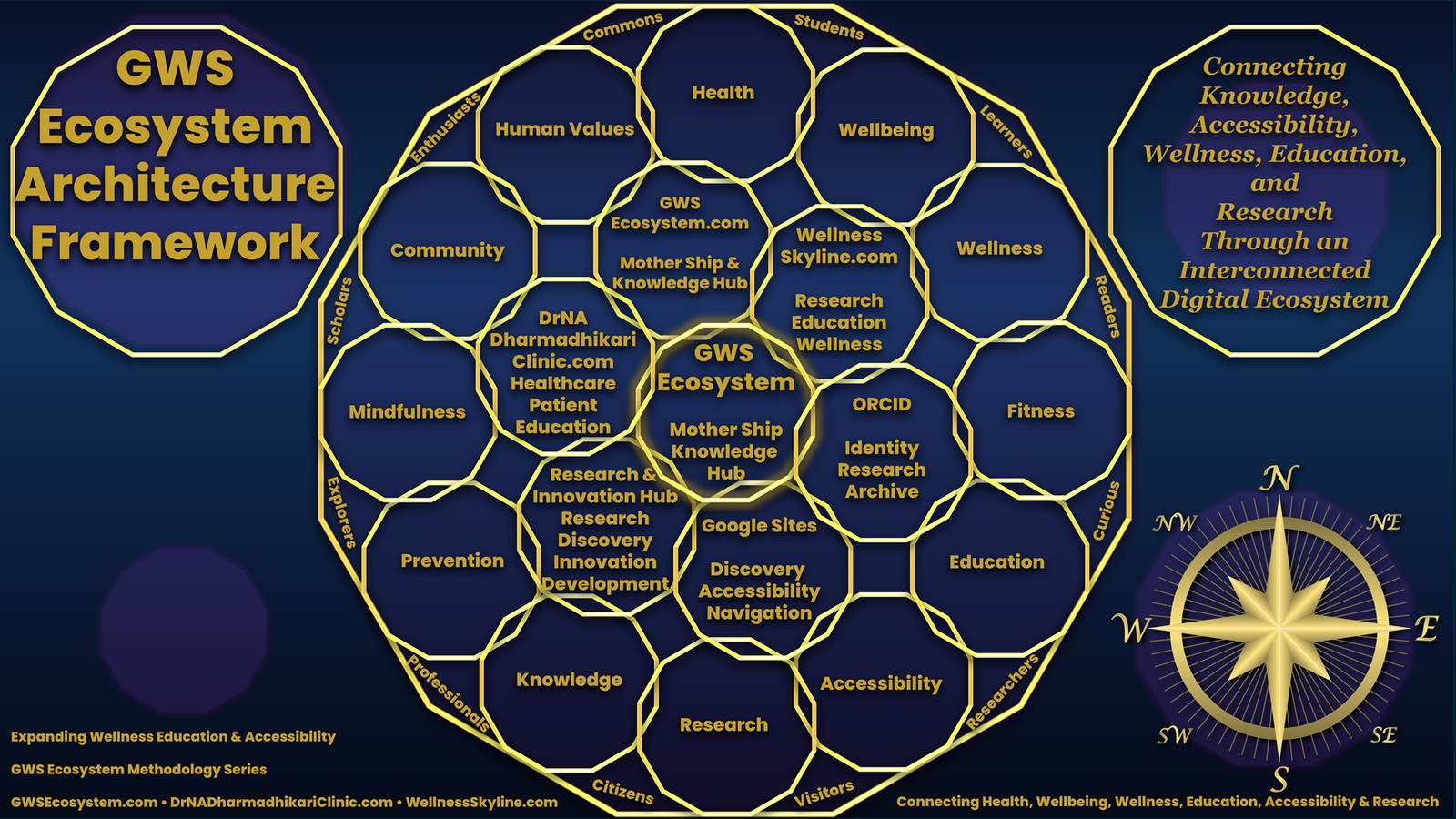
Every visitor arrives at a website with a purpose.
Some seek answers to important health questions. Others wish to improve their wellbeing, understand wellness more deeply, explore scientific concepts, discover reliable educational resources, or simply learn something meaningful.
The Global Wellness Skyline (GWS) Ecosystem has therefore been designed from the perspective of the learner rather than the publisher.
Instead of asking,
“How can we publish more information?”
we ask,
“How can knowledge become genuinely useful for every individual who visits our ecosystem?”
This people-centred philosophy creates several practical benefits.
Clear and Structured Learning
Information is presented in logical sections with meaningful headings, illustrations, frameworks, and interconnected educational series. This allows readers to progress naturally without feeling overwhelmed.
Reliable Educational Resources
Scientific concepts are simplified carefully while preserving their original meaning. Readers receive information that remains educational without sacrificing scientific integrity.
Better Accessibility
Educational content is designed to be understandable for students, healthcare professionals, educators, researchers, families, and individuals from diverse backgrounds.
Interconnected pages help readers continue learning rather than stopping after a single article. Every educational pathway contributes to a larger knowledge ecosystem.
Respect for Your Time
Instead of searching across multiple unrelated sources, visitors can explore carefully organized educational resources within one connected ecosystem.
Transparent Communication
The ecosystem openly explains its educational objectives, research philosophy, privacy practices, and responsible use of technology so that visitors understand not only the information presented but also the principles guiding its creation.
Lifelong Learning
Wellness is not achieved through a single article or one moment of inspiration. It develops through continuous learning, thoughtful reflection, responsible decision-making, and conscious daily practice.
Ultimately, the greatest benefit of any educational ecosystem is not the amount of information it contains.
Its greatest value lies in helping individuals understand, apply, and benefit from knowledge throughout their lives.
That is the guiding purpose of the Global Wellness Skyline Ecosystem.
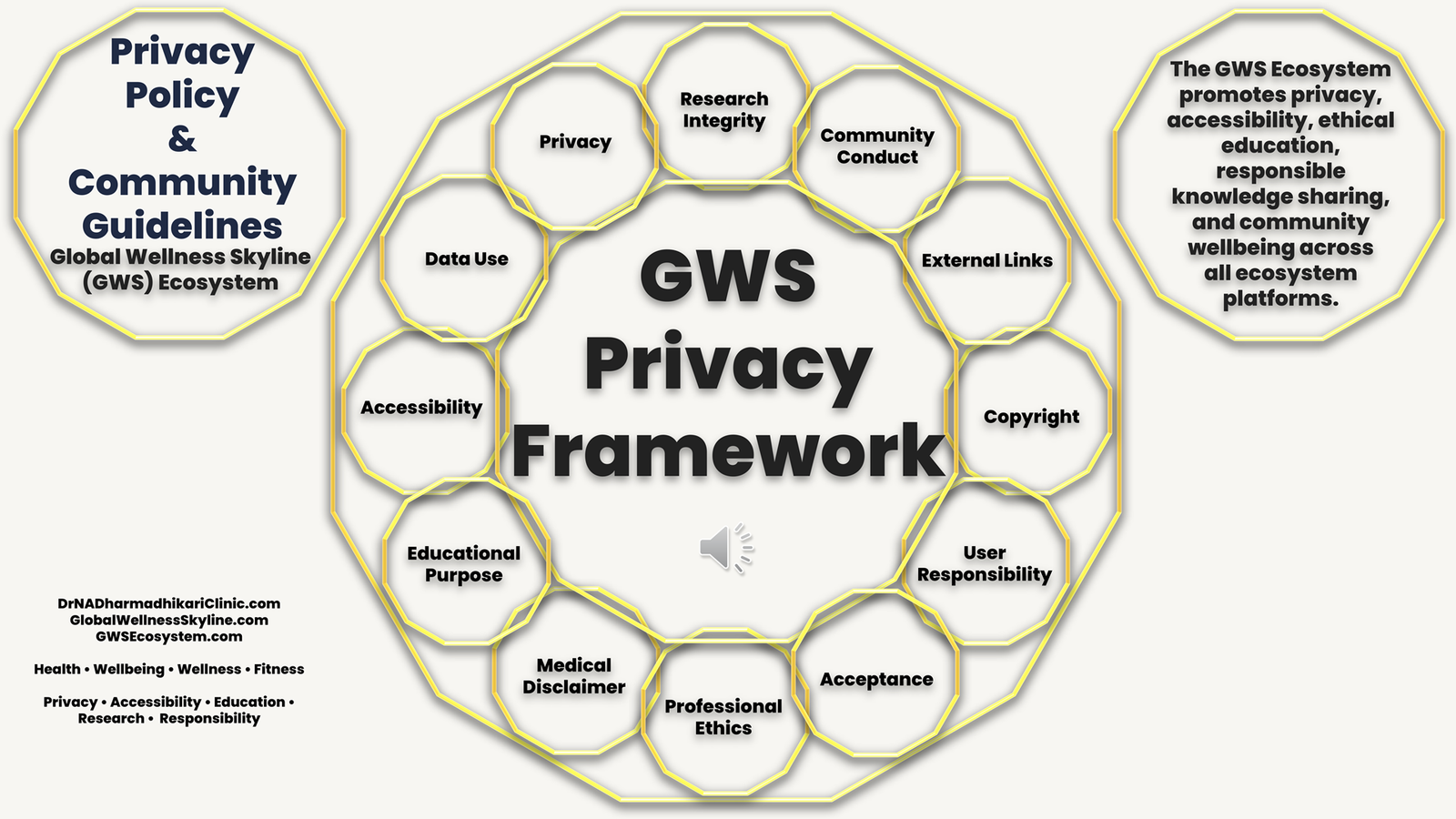
Trust forms the foundation of every meaningful educational relationship.
Whether learning occurs in a classroom, a library, a healthcare consultation, or a digital environment, individuals naturally expect honesty, transparency, respect, and responsible behaviour.
The same principles apply to educational websites.
Visitors deserve to understand how information is presented, why certain technologies are used, and how their digital experience is improved without compromising their privacy.
The Global Wellness Skyline (GWS) Ecosystem adopts a philosophy of responsible digital transparency.
Cookies, analytics tools, search engine integrations, structured data, and accessibility technologies are not implemented to monitor individuals unnecessarily. Their primary purpose is to improve website performance, educational accessibility, navigation, security, discoverability, and overall user experience.
For example:
- Cookies may remember language preferences or improve browsing efficiency.
- Anonymous analytics help identify which educational resources are most useful for visitors.
- Search engine indexing enables readers to discover relevant knowledge more easily.
- Structured data assists search engines and Artificial Intelligence systems in understanding educational content accurately.
- Accessibility improvements help individuals using different devices, browsers, and technologies experience the website more comfortably.
Importantly, these technologies function in support of education rather than replacing human judgment.
Responsible digital behaviour also extends beyond technology.
It encourages readers to evaluate information thoughtfully, respect intellectual property, acknowledge original sources, protect personal information, and contribute positively to digital communities.
The Global Wellness Skyline Ecosystem therefore views privacy, transparency, and ethical technology not as legal obligations alone, but as expressions of respect for every learner who becomes part of this educational journey.
Technology should never reduce trust.
Instead, responsible technology should strengthen trust through openness, honesty, and meaningful educational service.
“To understand how responsible digital behaviour, privacy, transparency, and ethical educational practices work together within the Global Wellness Skyline Ecosystem, you may also explore the following visual educational framework.”
The Philosophy Behind the Global Wellness Skyline (GWS) Ecosystem
Connecting healthcare, wellbeing, wellness, education, accessibility, research, and responsible global knowledge into one interconnected educational vision.
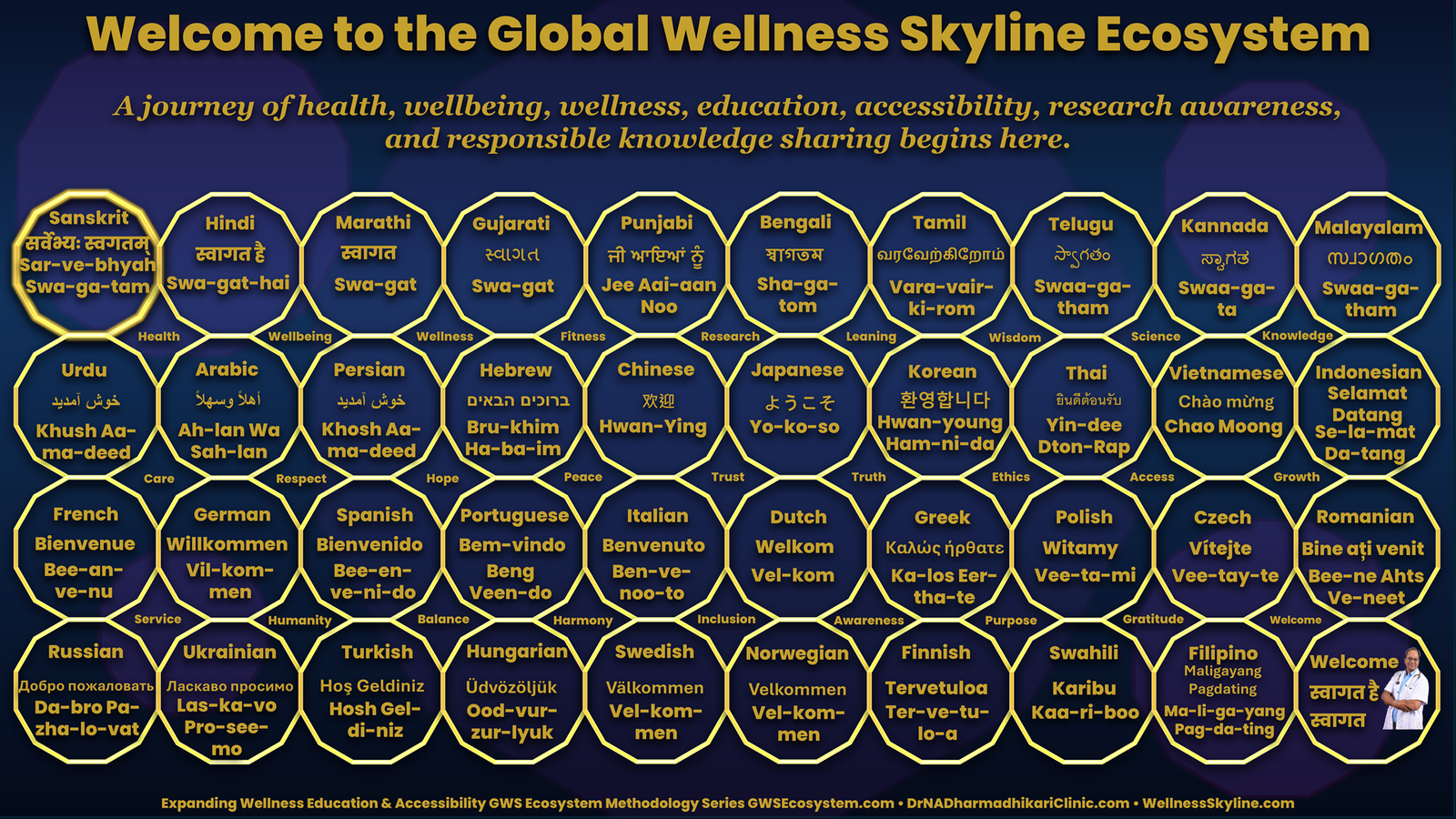
Every educational initiative begins with a vision.
Some seek to distribute information.
Some focus on professional training.
Others aim to solve specific technical problems.
The Global Wellness Skyline (GWS) Ecosystem was created to integrate healthcare experience, wellness education, accessibility, research awareness, digital knowledge organization, and responsible communication within one interconnected educational ecosystem.
Rather than functioning as isolated websites, each platform contributes a unique role while remaining connected through shared principles and common values.
The ecosystem demonstrates that knowledge can remain scientifically responsible while simultaneously becoming more understandable, more accessible, and more beneficial to society.
The Global Wellness Skyline (GWS) Ecosystem was created with a broader purpose—to establish an interconnected educational environment where knowledge contributes meaningfully to individual wellbeing, collective wellness, responsible research, lifelong learning, and ethical digital participation.
This vision recognizes that health is not merely the absence of disease.
Wellbeing extends beyond physical fitness.
Wellness is not limited to lifestyle choices.
Education reaches beyond classrooms.
Research extends beyond laboratories.
Technology reaches beyond machines.
Ultimately, every meaningful advancement should improve the quality of human life.
The GWS Ecosystem therefore integrates multiple educational dimensions into one coherent digital framework:
- Healthcare supported by scientific evidence.
- Wellness guided by practical understanding.
- Wellbeing strengthened through conscious living.
- Education simplified without compromising scientific integrity.
- Research communicated responsibly.
- Accessibility improved through thoughtful digital organization.
- Human values preserved while embracing technological innovation.
This philosophy intentionally avoids unnecessary boundaries between disciplines.
Medicine, education, technology, philosophy, communication, and research are not isolated fields. They continuously influence one another, and meaningful progress often emerges where these disciplines meet.
The ecosystem therefore encourages interdisciplinary understanding while remaining rooted in evidence, ethics, and human responsibility.
Every framework, educational series, article, visual presentation, research concept, and philosophical reflection published within the GWS Ecosystem seeks to contribute toward one enduring objective:
Helping knowledge become more understandable, more accessible, more responsible, and more beneficial for humanity.
Rather than viewing Artificial Intelligence as a replacement for human wisdom, the ecosystem embraces AI as a powerful educational assistant that becomes increasingly valuable when guided by reliable knowledge, responsible communication, and timeless human values.
Technology evolves rapidly.
Human dignity remains constant.
The GWS Ecosystem therefore exists not simply to participate in the digital age, but to contribute responsibly to its future.
Looking Towards the Future: Building Knowledge That Serves Humanity
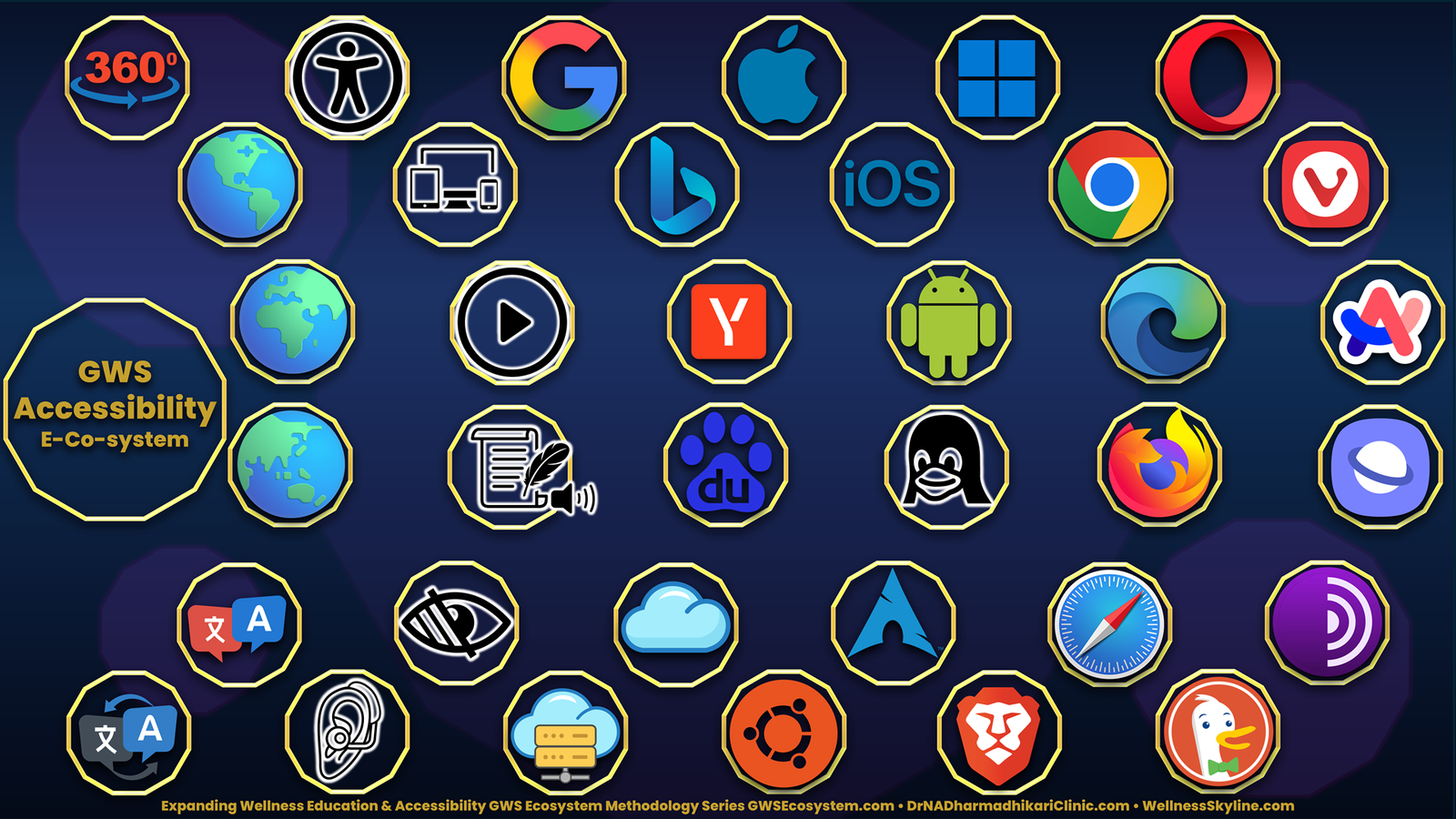
The future of education will not be defined solely by faster computers, more powerful search engines, or increasingly sophisticated Artificial Intelligence systems.
Its true success will depend upon the quality, integrity, accessibility, and responsibility of the knowledge we create today.
Every educational article, scientific framework, visual illustration, research publication, wellness guideline, and digital learning resource contributes to the knowledge environment inherited by future generations.
Artificial Intelligence systems learn from human knowledge.
Search engines organize human knowledge.
Educational platforms distribute human knowledge.
Ultimately, humanity remains responsible for creating trustworthy knowledge.
The Global Wellness Skyline Ecosystem therefore adopts a long-term perspective.
Rather than pursuing temporary digital trends, it seeks to establish educational resources that remain meaningful, understandable, and beneficial across changing technologies and generations.
This commitment includes:
- encouraging scientific curiosity,
- simplifying complex concepts responsibly,
- preserving educational integrity,
- promoting ethical communication,
- improving accessibility,
- supporting lifelong learning,
- strengthening interdisciplinary understanding,
- and inspiring responsible digital citizenship.
As intelligent technologies continue to evolve, collaboration between human wisdom and Artificial Intelligence will become increasingly important.
Machines may assist with organizing information.
Humans remain responsible for determining its purpose.
This partnership should never compete.
Instead, it should complement one another through shared goals of learning, wellbeing, education, research, and service.
A Living Knowledge Ecosystem
The GWS Ecosystem continues to evolve through:
- Healthcare education
- Wellness literacy
- Research awareness
- Scientific frameworks
- Human values
- Accessibility initiatives
- Digital knowledge organization
- Responsible lifelong learning
Its objective is not merely to publish information.
Its purpose is to create an environment where knowledge grows into wisdom through continuous learning, thoughtful organization, and meaningful participation.
The Global Wellness Skyline Ecosystem therefore envisions a future where digital knowledge ecosystems help individuals not merely consume information, but cultivate understanding, exercise sound judgment, develop wisdom, and contribute positively to society.
The journey from knowledge to wisdom is not completed by technology alone.
It is completed when knowledge inspires compassionate action, responsible decision-making, lifelong learning, and meaningful service to humanity.
That journey continues with every learner who chooses curiosity over certainty, understanding over assumption, responsibility over convenience, and wisdom over mere information.
Conclusion
Responsible Digital Knowledge introduces the original GWS Ecosystem Research Methodology—an educational framework for discovering, validating, simplifying, structuring, preserving, and responsibly sharing digital knowledge. This foundational methodology demonstrates how Artificial Intelligence and human wisdom can work together to create accessible, ethical, and lifelong learning ecosystems for wellness, wellbeing, health, education, and research.
Human progress has always depended upon our willingness to learn, question, discover, simplify, organize, and share.
The digital age has expanded this responsibility.
Today we communicate not only with people but also with intelligent technologies that help connect knowledge with those who need it.
Creating knowledge is only the beginning.
Simplifying it broadens understanding.
Structuring it preserves meaning.
Sharing it responsibly allows knowledge to benefit humanity.
When these four stages work together, information becomes understanding, understanding becomes wisdom, and wisdom becomes lasting human progress.
That philosophy continues to guide the Global Wellness Skyline (GWS) Ecosystem.
Dr. Neelesh Aniruddha Dharmadhikari
General Physician & Surgeon
Founder — Global Wellness Skyline (GWS) Ecosystem
© Dr. Neelesh Aniruddha Dharmadhikari | Dr N A Dharmadhikari Clinic • Wellness Skyline • Global Wellness Skyline (GWS) Ecosystem
All content, concepts, graphics, educational materials, and original frameworks presented on this page are the intellectual property of Dr. Neelesh Aniruddha Dharmadhikari.
You are welcome to reference or share this work with proper attribution and a direct link to the original source page. Unauthorized reproduction, redistribution, modification, or commercial use without permission is prohibited.
All rights reserved.
Explore the Interconnected Knowledge Series of the GWS Ecosystem
Each series represents a distinct dimension of health, wellbeing, wellness, education, accessibility, research, and human development.
Explore the interconnected knowledge frameworks, educational resources, wellness insights, accessibility initiatives, and research-driven series that collectively form the Global Wellness Skyline (GWS) Ecosystem.
Global Wellness Universe


Ecosystem Gateway

Previous
Explore the Welcome Framework
Welcome to the Global Wellness Skyline (GWS) Ecosystem
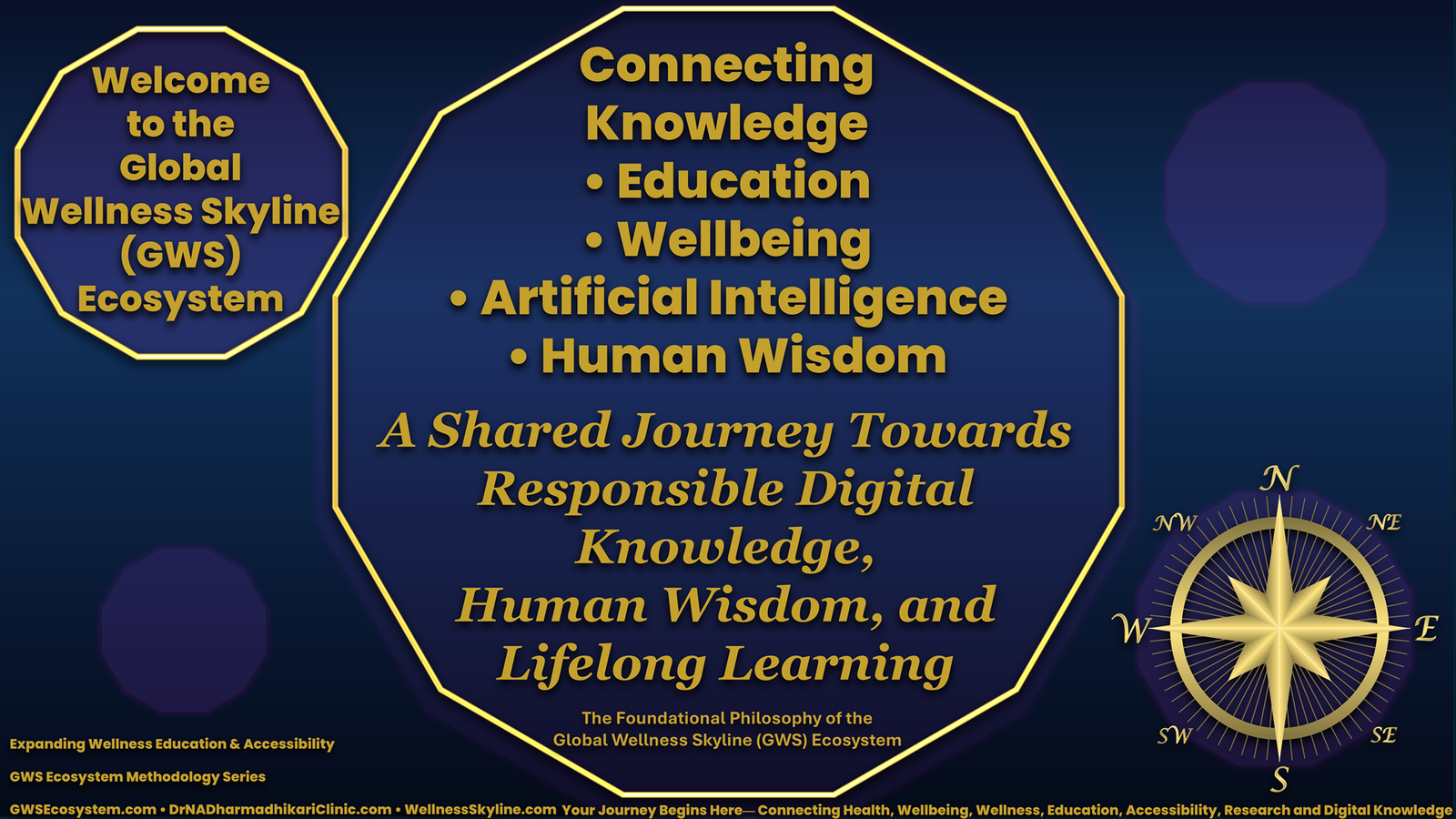
The GWS Ecosystem is an interconnected digital knowledge platform dedicated to integrating healthcare, wellness education, research, accessibility, responsible digital knowledge, patient resources, ethical healthcare communication, and lifelong learning for the benefit of individuals, families, professionals, and society.